

Thursday, 30 Apr 2026
Subscribe
logo logo
  • Global
  • Technology
  • Business
  • AI
  • Cloud
  • Edge Computing
  • Security
  • Investment
  • More
    • Sustainability
    • Colocation
    • Quantum Computing
    • Regulation & Policy
    • Infrastructure
    • Power & Cooling
    • Design
    • Innovations
  • 🔥
  • data
  • revolutionizing
  • Stock
  • Investment
  • Future
  • Secures
  • Growth
  • Top
  • Funding
  • Power
  • Center
  • technology
Font ResizerAa
Silicon FlashSilicon Flash
Search
  • Global
  • Technology
  • Business
  • AI
  • Cloud
  • Edge Computing
  • Security
  • Investment
  • More
    • Sustainability
    • Colocation
    • Quantum Computing
    • Regulation & Policy
    • Infrastructure
    • Power & Cooling
    • Design
    • Innovations
Have an existing account? Sign In
Follow US
© 2022 Foxiz News Network. Ruby Design Company. All Rights Reserved.
Silicon Flash > Blog > AI > Self-Teaching AI: MIT’s Revolutionary Framework for Autonomous Learning
AI

Self-Teaching AI: MIT’s Revolutionary Framework for Autonomous Learning

Published June 24, 2025 By Juwan Chacko
Share
4 Min Read
Self-Teaching AI: MIT’s Revolutionary Framework for Autonomous Learning
SHARE

Summary:
1. MIT researchers have developed a framework called SEAL that allows large language models to continuously learn and adapt by updating their own internal parameters.
2. SEAL could be beneficial for enterprise applications, especially for AI agents operating in dynamic environments that require constant adaptation.
3. The framework operates on a two-loop system, teaching models to generate their own training data and finetuning directives to improve performance on target tasks.

Rewritten Article:

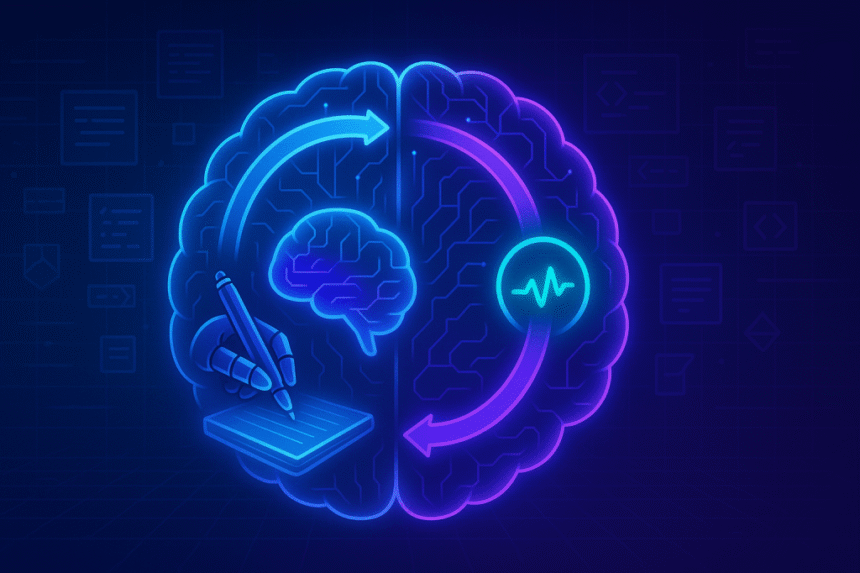
MIT scientists have unveiled a groundbreaking framework known as Self-Adapting Language Models (SEAL), designed to empower large language models (LLMs) to evolve and learn continuously by adjusting their internal parameters. This innovation opens up new possibilities for enterprise applications, particularly for AI agents navigating dynamic environments where the ability to process new information and adjust behavior is crucial.

One of the key challenges in working with large language models is the difficulty of tailoring them to specific tasks, integrating fresh data, or acquiring new reasoning skills. While current methods involve fine-tuning or in-context learning, they often fall short in enabling models to develop their own strategies for efficiently processing and learning from new information.

Jyo Pari, a PhD student at MIT and co-author of the paper, emphasizes the need for deeper and persistent adaptation in many enterprise scenarios. For instance, a coding assistant may need to internalize a company’s unique software framework, while a customer-facing model might have to learn a user’s individual behavior or preferences over time.

SEAL addresses these challenges by equipping LLMs with the ability to generate their own training data and finetuning instructions, allowing them to reshape new information, create synthetic training examples, and define technical parameters for the learning process. This approach essentially teaches models how to create personalized study guides, enabling them to absorb and internalize information more effectively.

See also  Waymo Launches Autonomous Testing Program in the City of Brotherly Love

Operating on a two-loop system, SEAL utilizes a reinforcement learning algorithm to guide models in updating their weights through self-edits. This iterative process enhances the model’s performance on target tasks, enabling it to become proficient at self-teaching over time. While the researchers initially tested SEAL with a single model, they also explore the potential of a “teacher-student” model configuration for more specialized adaptation pipelines in enterprise settings.

The implications of SEAL extend beyond academia, offering promising prospects for AI agents that must continuously acquire and retain knowledge while interacting with their environment. By enabling models to generate their own high-utility training signal, SEAL paves the way for autonomous knowledge incorporation and adaptation to novel tasks.

Despite its innovative potential, SEAL does have limitations, such as the risk of catastrophic forgetting and the time-consuming nature of tuning self-edit examples and training the model. However, a hybrid memory strategy that combines external memory for factual and evolving data with weight-level updates via SEAL can help enterprises strike a balance between knowledge integration and model efficiency.

In conclusion, SEAL represents a significant advancement in the field of large language models, demonstrating the potential for models to evolve beyond static pretraining and autonomously adapt to new challenges. This framework offers a practical solution for enterprises seeking to enhance their AI capabilities and stay at the forefront of innovation in a rapidly evolving digital landscape.

TAGGED: autonomous, framework, Learning, MITs, Revolutionary, SelfTeaching
Share This Article
Facebook LinkedIn Email Copy Link Print
Previous Article Redefining Sustainability: A Strategic Imperative for Financial Services Institutions Redefining Sustainability: A Strategic Imperative for Financial Services Institutions
Next Article Cellugy Secures €8.1M in Investment Cellugy Secures €8.1M in Investment
Leave a comment

Leave a Reply Cancel reply

Your email address will not be published. Required fields are marked *

Your Trusted Source for Accurate and Timely Updates!

Our commitment to accuracy, impartiality, and delivering breaking news as it happens has earned us the trust of a vast audience. Stay ahead with real-time updates on the latest events, trends.
FacebookLike
LinkedInFollow

Popular Posts

Amazon’s Innovative Approach: Using Wastewater to Cool Data Centers as Demand Skyrockets

Amazon Web Services is making significant strides towards achieving its goal of being "water positive"…

June 9, 2025

Tech Spectacular: A Comprehensive Look at CES 2026 Unveilings, Featuring Nvidia, AMD, and Razer Innovations

CES 2026 is currently underway in Las Vegas, with the show welcoming the public after…

January 7, 2026

Electronic Arts Closes Cliffhanger Games Studio and Cancels Highly Anticipated ‘Black Panther’ Game

Summary: 1. Electronic Arts is shutting down Cliffhanger Games and canceling development on a Black…

May 29, 2025

NVIDIA GTC 25: General Motors Resets Its Goals for Artificial Intelligence

In the ever-evolving landscape of automotive technology, every modern car is essentially a sophisticated computer…

April 24, 2025

Secure Your Retirement with These 5 Dividend Stocks for a Lifetime of Income

Summary: 1. The blog discusses the uncertainty surrounding Social Security and introduces five reliable dividend…

September 12, 2025

You Might Also Like

Revolutionizing Enterprise Treasury Management with AI Advancements
AI

Revolutionizing Enterprise Treasury Management with AI Advancements

Juwan Chacko
Introducing Dyson’s Sleek PencilWash: A Revolutionary Wet Floor Cleaner Coming Soon
Technology

Introducing Dyson’s Sleek PencilWash: A Revolutionary Wet Floor Cleaner Coming Soon

SiliconFlash Staff
Revolutionizing Finance: The Integration of AI in Decision-Making Processes
AI

Revolutionizing Finance: The Integration of AI in Decision-Making Processes

Juwan Chacko
Navigating the Future: A Roadmap for Business Leaders with Infosys AI Implementation Framework
AI

Navigating the Future: A Roadmap for Business Leaders with Infosys AI Implementation Framework

Juwan Chacko
logo logo
Facebook Linkedin Rss

About US

Silicon Flash: Stay informed with the latest Tech News, Innovations, Gadgets, AI, Data Center, and Industry trends from around the world—all in one place.

Top Categories
  • Technology
  • Business
  • Innovations
  • Investments
Usefull Links
  • Home
  • Contact
  • Privacy Policy
  • Terms & Conditions

© 2025 – siliconflash.com – All rights reserved

Welcome Back!

Sign in to your account

Lost your password?