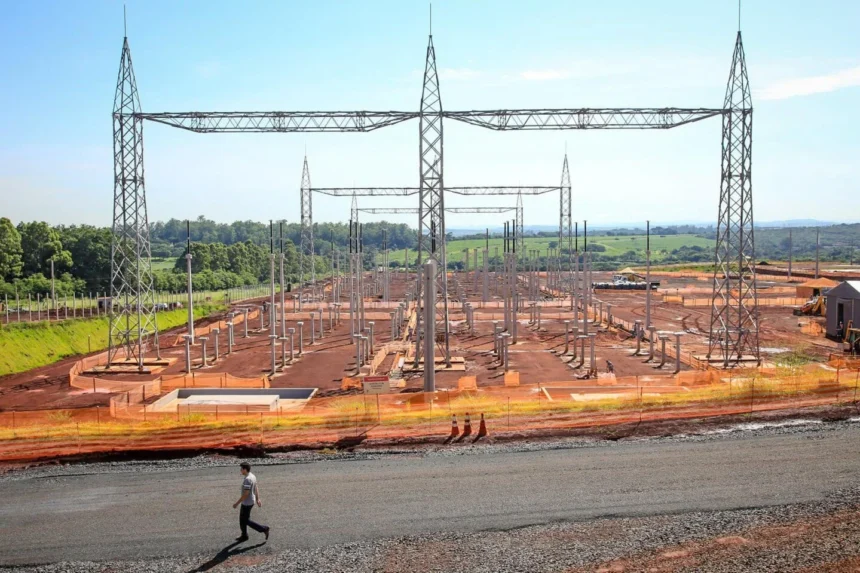
The digital world is constantly evolving, with hyperscale providers playing a central role in shaping global digital infrastructure. According to DC Byte’s 2025 Global Data Centre Index, public cloud, social media, and AI workloads make up nearly 70% of global data centre demand. The decisions made by hyperscalers regarding building and leasing not only impact where power networks are reinforced or expanded but also influence government policies and investment flows.
The relationship between enterprises and hyperscalers involves various factors such as cloud costs, resilience, access to power grids, data sovereignty, environmental concerns, staffing, and the pace of AI initiatives. McKinsey highlights that AI workloads are driving a surge in high-density data centre construction, with Goldman Sachs Research predicting a 165% increase in data centre power demand by 2030.
Hyperscalers are driving much of this growth, leading to three key implications for enterprises. Firstly, pricing power is influenced by competition among hyperscalers for scarce power resources, impacting cloud pricing and reserved capacity terms. Secondly, availability and latency can be affected if preferred metro areas are at full capacity, potentially leading to users being redirected to secondary regions. Lastly, strategic dependence on hyperscale platforms increases as more workloads are hosted, exposing enterprises to suppliers’ location, energy, and regulatory decisions.
The current landscape of cloud expansion prioritizes power availability over factors like land prices and connectivity. Regions like Northern Virginia, home to a significant portion of the world’s data centres, are facing challenges in connecting large loads to the grid due to overwhelming demand. Vacancy rates in leading metros are below 1%, indicating that new capacity is sold out before it is even built. Hyperscalers are securing power and land well in advance, giving them a competitive advantage.
As hyperscale infrastructure decentralizes, capacity is spreading within and between countries’ borders as operators seek suitable power and land resources. In North America, the US Southeast is emerging as a fast-growth area, offering cheaper land and incentives for hyperscale investments. The Asia-Pacific region is experiencing rapid growth, with investments expanding beyond traditional hubs to cities like Johor, Jakarta, and Bangkok. In Europe, growth is shifting towards Southern and Central Europe, the Nordics, and the Middle East and Africa.
Pre-leasing is becoming a popular model for hyperscalers, with projects often sold out before public announcements. Lead times for businesses using hyperscalers may vary based on demand and location, with unit pricing influenced by local supply-demand dynamics and power costs. Government policies play a significant role in shaping the availability of capacity and the speed of project implementation, with a focus on environmental standards and energy efficiency.
In conclusion, the evolving landscape of hyperscale providers is reshaping the global digital infrastructure, with implications for enterprises in terms of pricing, availability, strategic dependence, and sustainability. As the demand for data centres continues to grow, the decisions made by hyperscalers will have a profound impact on the digital ecosystem and the way businesses operate in the future.
Southern European nations, such as Italy and Poland, are striving to establish themselves as overflow locations from the FLAP-D region, implementing changes in zoning regulations and upgrading their power infrastructure to accommodate hyperscale data centers. It typically takes three to seven years for sustainable cloud regions to become operational, following local laws on renewable energy and environmental practices like waste heat reuse.
Skills, supply chains, vendor risk
Behind the scenes of every large-scale data center are construction workers, electrical engineers, and operations teams, creating a tight labor market. The construction industry in the US requires approximately 439,000 additional workers to meet the demand for new data center facilities. The UK has allocated £600 million to address skill shortages in construction, with the government recognizing persistent vacancies in the sector. Delays and bottlenecks are caused by extended lead times for critical equipment such as transformers, switchgear, and cooling systems, escalating investor risks and driving up costs for customers.
Conclusions
The competition among hyperscale providers is not about constructing the largest data center campuses, but about securing power resources, complying with local regulations, and offering consistent capacity at competitive prices. The time-consuming construction process for new capacity is a significant challenge, exacerbated by supply chain disruptions. It is crucial for boardroom discussions to consider infrastructure realities, AI integration, cloud strategy, and ESG compliance. The interplay of power availability, policy frameworks, and skilled workforce shapes the roadmap for cloud expansion, with hyperscale data center growth dominating the market. The future of enterprise cloud procurement hinges on whether the AI-driven expansion continues or faces a downturn in the next five years.