


The Asia-Pacific (APAC) region is currently witnessing a significant surge in data center construction, reminiscent of the explosive growth observed in North America. Projections suggest that this trend will persist well into the next decade. According to Moody’s forecasts, data center capacity in APAC is set to skyrocket through 2030, resulting in expenditures exceeding $800 billion and essentially doubling the region’s infrastructure within a five-year period. This impressive growth trajectory has the potential to position APAC as a dominant force, accounting for 40% of global data center capacity.
Despite this rapid expansion, the region faces a critical challenge in terms of sustainability policies that call for a fundamental shift in how the industry approaches growth.
### A Roadmap for Green Data Center Expansion
Recognizing the tension between surging demand and environmental responsibility, the Asia-Pacific Data Centre Association (APDCA) has introduced solutions to address these challenges. Recently, the APDCA published a white paper titled “Data Centres and Energy Sustainability: A Regional Perspective on Best Practices and Policy Frameworks,” offering a strategic roadmap to navigate this complex landscape.
The recommendations outlined in the white paper focus on three key areas:
– **Energy Sustainability Policies**
– Accelerating the availability of renewable energy.
– Building robust and flexible grid infrastructure.
– Expanding access to renewable energy through Power Purchase Agreements (PPAs).
Related: [Japan’s Data Center Boom: Growth Persists Despite Power Constraints and Construction Hurdles](#)
### Energy Efficiency Standards
The white paper also emphasizes the importance of energy efficiency standards. Engaging stakeholders to ensure that these standards reflect practical, on-the-ground realities is crucial. Furthermore, promoting regulatory alignment and interoperability for data center energy efficiency guidelines across APAC markets is essential.
### Energy Innovation Partnerships
To accelerate research and development (R&D) and training, fostering public-private partnerships is recommended. Jeremy Deutsch, Chair of the APDCA, highlights the critical nature of these recommendations in balancing energy sustainability with the rising demand for digital infrastructure in the Asia Pacific region.
### Energy Realities and Renewable Goal
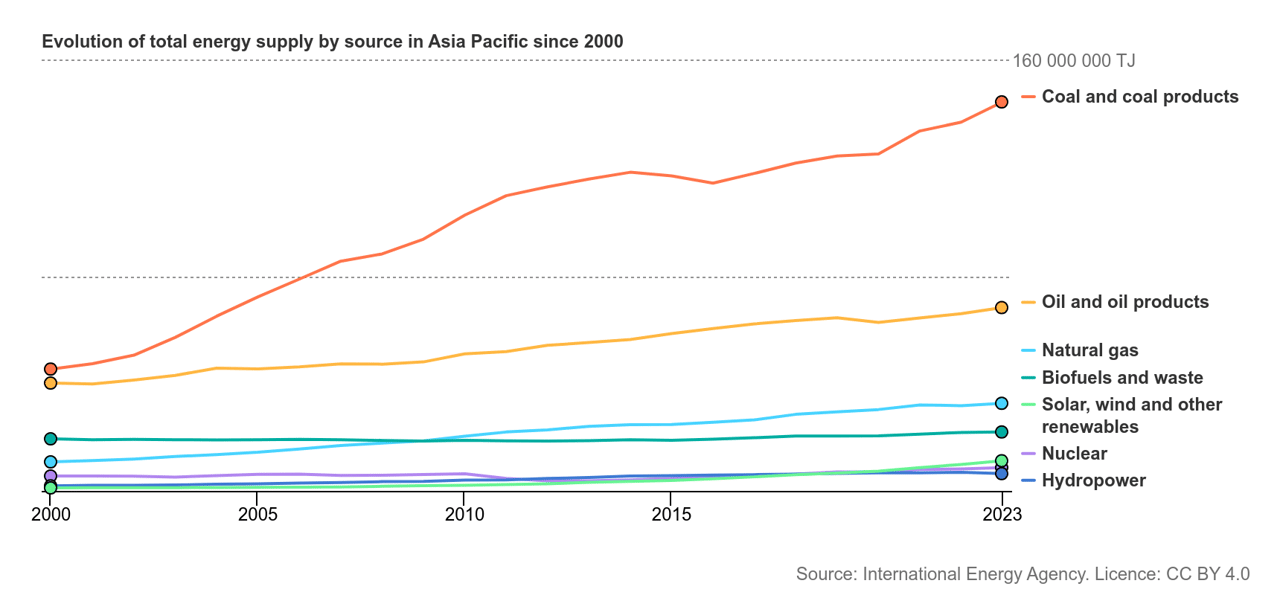
While net-zero ambitions in APAC face significant obstacles, particularly given the current energy mix, there is optimism for the future. The region’s reliance on coal, oil, gas, and nuclear sources underscores the challenges ahead. However, reports suggest that by 2030, a substantial portion of Southeast Asia’s data centers could be powered by solar and wind energy, provided targeted incentives are in place.
Related: [Inside APAC’s Data Center Boom: Q&A With Digital Realty’s Regional Head](#)
### APAC vs. ASEAN: Diverging Sustainability Challenges
Sustainability efforts in APAC are unfolding unevenly, with notable variations between subregions. The ASEAN countries, including Indonesia, Malaysia, the Philippines, Singapore, Thailand, and Vietnam, are emerging as significant data center hotspots. However, challenges persist, especially concerning the reliance on fossil fuels in powering the region’s data centers.
Related: [Vietnam’s Data Center Boom: The Next Singapore?](#)
The broader APAC region, encompassing major economies like China, Japan, South Korea, India, and Australia, faces even greater challenges. Despite progress in renewable energy projects, countries like China, India, and Australia continue to expand traditional energy generation, posing environmental concerns.
– **China and India:**
– Both nations have rapidly built new coal-fired power plants, leading to record-high global coal consumption.
– **Australia:**
– While transitioning from coal to renewables, the country has increased reliance on natural gas for energy stability.
“As coal-fired power stations retire, renewable energy connected with transmission and distribution, firmed with storage, and backed up by gas-powered generation is the lowest-cost way to supply electricity to homes and businesses through Australia’s transition to a net-zero economy,” explained Daniel Westerman, Chief Executive Officer at the Australian Energy Market Operator.
### The Path to Decarbonization
Balancing the diverse energy mix in APAC with growing power demand while striving to meet renewable energy targets poses a significant challenge. Each nation must navigate its unique path toward sustainability, shaped by its energy infrastructure, policies, and economic priorities.
According to Dominik Utama, Partner at Bain & Company, the adoption of renewable energy may become more viable in select markets as advancements in policy, grid infrastructure, and cross-border energy trading improve access to renewables. Offshore wind development in Northeast Asia, ASEAN power interconnects, and investments in transmission and storage systems in Australia are among the key advancements driving this transition.
Battery energy storage systems (BESS) are expected to play a vital role in increasing the penetration of renewable energy across the region. Solar and wind energy, combined with BESS, have the potential to meet a substantial portion of electricity demand from data centers in ASEAN.

### ‘No Silver Bullet for Decarbonization’
While technologies like BESS offer promise, experts caution against expecting simple solutions. Achieving decarbonization requires a balanced and economically pragmatic approach, considering factors such as cost competitiveness, energy affordability, reliability, security, and emission reduction as key priorities shaping energy decision-making across APAC.
“The journey toward decarbonization remains long,” concluded Humayun Tai, Senior Partner at McKinsey, emphasizing the complexity of the energy transition and the need for a comprehensive approach tailored to each region’s unique circumstances.

