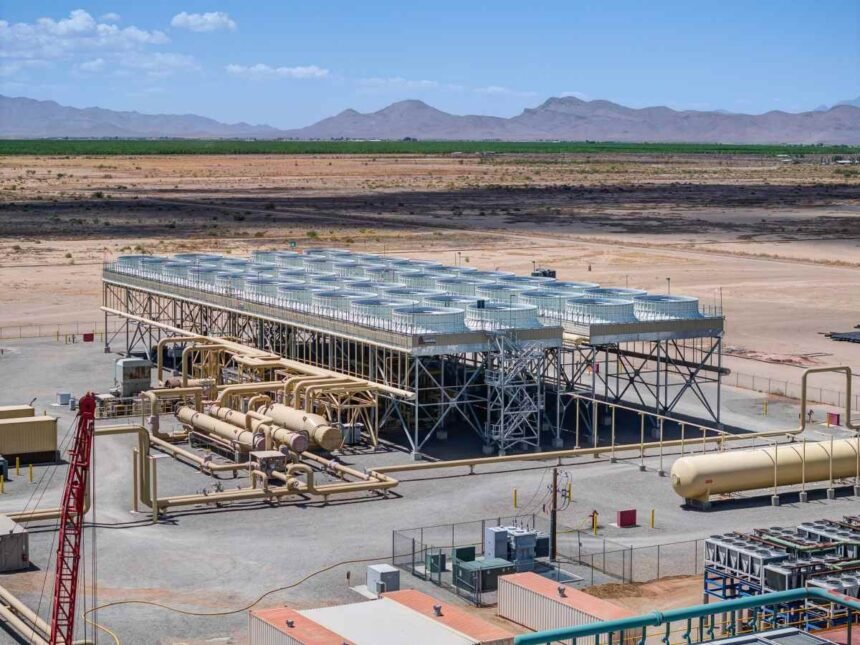
The Earth’s crust hides a vast amount of energy that experts at the Department of Energy believe could be harnessed for geothermal power to produce a significant portion of the United States’ electricity by 2050. The potential for geothermal energy is immense, with estimates suggesting it could generate up to 60 gigawatts, equivalent to nearly 10% of the country’s power needs.
Zanskar co-founder and CEO Carl Holland believes that the current projections for geothermal energy are underestimated, particularly when it comes to traditional geothermal methods.
The Department of Energy’s calculations are based on advancements in enhanced geothermal techniques, such as fracking to access deep underground hot rocks. While companies like Fervo and Sage Geosystems are exploring this approach, conventional geothermal methods, which tap into naturally fractured hotspots, have seen limited growth in the U.S., producing only 4 gigawatts of power over the past decade.
Holland argues that conventional geothermal has been hindered by outdated assumptions and underestimates the number of undiscovered systems. With modern drilling technologies, each system could potentially yield significantly more power, turning geothermal energy into a terawatt-scale opportunity.
Zanskar is leveraging AI to revitalize conventional geothermal energy, successfully revitalizing a struggling power plant in New Mexico and identifying two new sites with a combined potential of over 100 megawatts.
The company’s achievements have attracted a $115 million Series C funding round led by Spring Lane Capital, with participation from various other investment firms.
Techcrunch event
San Francisco
|
October 13-15, 2026
According to Holland, the majority of geothermal sites have gone unnoticed due to the reliance on surface indicators like hot springs or volcanoes. AI plays a crucial role in uncovering these hidden resources, as around 95% of geothermal systems do not exhibit obvious surface signs.
Zanskar employs supervised machine learning models to analyze diverse data sets, including historical accidental discoveries, to identify promising sites for validation by on-site teams.
The company utilizes Bayesian evidential learning (BEL) to develop plans for site development, combining existing data with modeling to generate probabilities and fill in knowledge gaps using a geothermal simulator.
Zanskar’s innovative approach has yielded positive results, with successful exploration of three sites in the previous funding round. The company aims to secure at least a gigawatt of generating capacity from its pipeline of potential sites, primarily focusing on the U.S. West region for its abundant geothermal resources.
While challenges remain in geothermal exploration, Holland remains optimistic about Zanskar’s trajectory, emphasizing the transformative potential of their approach in revolutionizing the geothermal energy sector.